Prompt Content
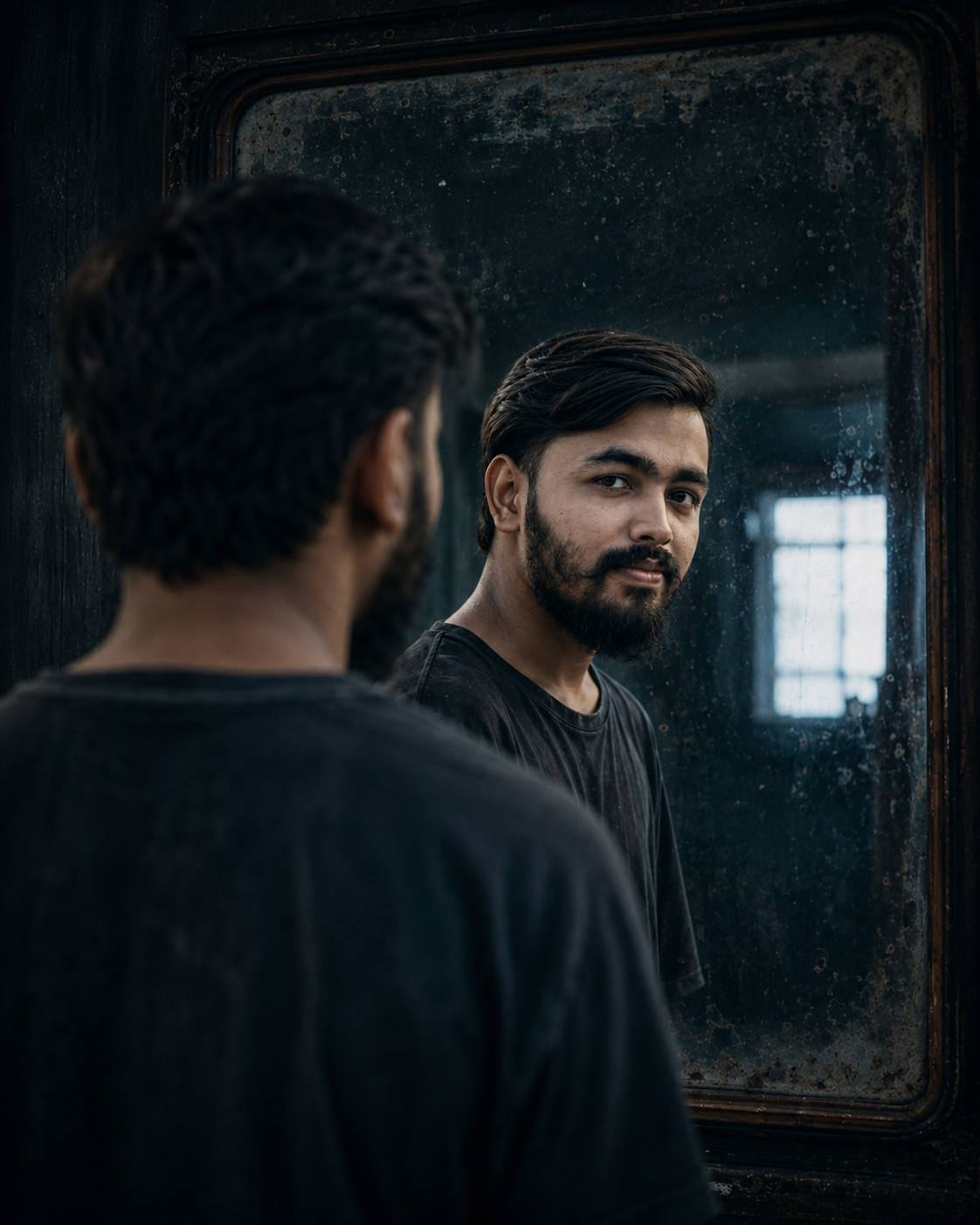
Moody cinematic mirror portrait of the same young South Asian man from the reference image, face identity preserved with maximum likeness, standing in front of an old vintage dusty wooden mirror inside a dark abandoned room. His reflection is perfectly sharp and detailed while the back of his head and shoulders appear blurred in the foreground. Wearing an oversized faded black t-shirt, serious emotional expression, deep thoughtful eyes, realistic beard and hairstyle exactly matching the reference photo. Dirty antique mirror covered with dust particles, stains, scratches and age marks. Cold blue cinematic color grading, low-key lighting, dramatic shadows, melancholic lonely atmosphere, soft natural window light illuminating the face, ultra-realistic skin texture, visible pores, subtle film grain, shallow depth of field, indie movie aesthetic, moody storytelling photography, 50mm lens, photorealistic, highly detailed, realistic reflections, blurred background, cinematic composition, atmospheric mood, volumetric light rays, professional color grading, masterpiece photography, 8K ultra detailed, HDR, natural facial proportions, realistic clothing folds, emotional portrait, vertical framing, Instagram cinematic aesthetic, aspect ratio 4:5.
Moody Cinematic Mirror Portrait: A Story of Solitude and Reflection
A mirror can be far more than a simple reflective surface. In visual storytelling, it often becomes a powerful symbol of memory, loneliness, self-examination, and emotions that are difficult to express through words. This creative concept transforms an ordinary mirror portrait into a deeply atmospheric cinematic scene, placing a young South Asian man alone inside an abandoned room and using his reflection to tell the emotional story.
The entire composition is built around a quiet, melancholic mood. Instead of presenting the subject in a bright or polished environment, the scene takes place inside a dark, aged room where every element appears to carry traces of time. The vintage wooden mirror, dusty surroundings, dramatic shadows, and restrained blue color palette create the feeling of a forgotten moment captured from an independent film.
The Reflection as the Main Character
The most important visual element is the mirror reflection.
The man’s reflection is intended to remain perfectly sharp and highly detailed, becoming the primary focal point of the image. His face carries a serious, thoughtful expression, with deep eyes suggesting that he is lost in his own thoughts.
In contrast, the back of his head and shoulders appear softly blurred in the foreground. This separation creates a cinematic depth effect and immediately establishes two visual layers: the physical person standing before the mirror and the emotional person revealed through the reflection.
The technique gives the viewer the impression that they are witnessing a private moment rather than simply looking at a posed photograph.
Preserving Facial Identity
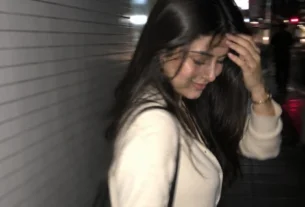
The concept places particular importance on maintaining the recognizable identity of the subject from the reference image.
Facial proportions, hairstyle, beard, eyes, and other defining characteristics are intended to remain consistent. The goal is to make the reflected portrait feel like the same individual rather than a generic interpretation of a young South Asian man.
Natural facial proportions are especially important in a cinematic portrait because excessive retouching or unrealistic facial changes can immediately destroy the authenticity of the scene.
The expression should remain emotionally restrained. Rather than exaggerated sadness, the face communicates a quieter form of introspection—the kind of emotion that can be felt without being openly displayed.
The Abandoned Room
The environment plays an equally important role in establishing the story.
The room is intentionally dark, aged, and neglected. Its abandoned appearance creates an immediate sense of isolation. There is no modern decoration competing for attention, allowing the mirror and the subject to dominate the composition.
The vintage dusty wooden mirror becomes a character in its own right.
Its old wooden frame suggests age and history, while the imperfections across its surface—dust particles, stains, scratches, and worn marks—make it feel genuinely used and forgotten.
These imperfections are important because they prevent the scene from appearing artificially clean. A perfectly polished mirror would contradict the abandoned atmosphere. Instead, the damaged surface reinforces the idea that the subject is surrounded by remnants of the past.
Clothing and Understated Styling
The oversized faded black T-shirt contributes to the understated visual language.
There is no elaborate fashion styling. The clothing is simple, slightly worn, and relaxed, allowing the emotional expression and environment to remain the focus.
Realistic fabric folds add physical credibility to the portrait. The loose silhouette of the T-shirt also complements the melancholic atmosphere, creating a casual appearance that feels appropriate for an intimate, unguarded moment.
The absence of bright colors in the clothing further strengthens the restrained mood.
Cold Blue Cinematic Color Palette
Color grading is one of the defining characteristics of the concept.
A cold blue cinematic treatment creates a visual sense of emotional distance. Cooler tones can make a scene feel quieter, more isolated, and more introspective than warm color palettes typically do.
However, the grading should remain sophisticated rather than excessively blue. Natural skin tones still need to retain believable warmth so that the subject does not appear artificial.
The contrast between the cool environment and the naturally illuminated face can become particularly powerful. It allows the face to emerge from the darkness without destroying the mysterious atmosphere surrounding him.
Soft Window Light
The lighting design is intentionally minimal.
A soft source of natural window light illuminates the man’s face while much of the surrounding room remains in shadow. This creates a low-key lighting setup where darkness becomes an important part of the composition.
The light should reveal enough facial detail to show realistic skin texture, beard detail, and the expression in his eyes, while leaving parts of the environment subtly concealed.
Volumetric rays passing through the dusty atmosphere can add another layer of depth. When light interacts with floating dust particles, the room can feel almost tangible, as though the viewer has stepped inside it.
Realistic Skin and Facial Texture
The portrait is designed around photographic realism rather than artificial perfection.
Natural skin texture, subtle pores, beard details, and realistic facial proportions help preserve the authenticity of the subject.
The skin should not look excessively smooth or plastic. Small imperfections are valuable because they make the portrait feel photographed rather than digitally manufactured.
Likewise, the eyes should retain natural reflections and believable depth. Since the expression is central to the emotional story, the eyes become one of the strongest storytelling elements in the image.
Dust, Scratches, and Age Marks
The condition of the mirror provides a visual metaphor for the atmosphere of the entire scene.
Dust particles suggest neglect. Scratches suggest time and use. Stains and age marks introduce imperfections that make the reflection feel slightly separated from the present moment.
These details also interact beautifully with the light. Tiny particles can become visible within the illuminated areas while disappearing into the shadows, creating a layered cinematic environment.
The mirror should remain realistically reflective despite its imperfections. The viewer needs to clearly recognize the subject’s reflection while simultaneously noticing the accumulated signs of age.
Shallow Depth of Field
A shallow depth of field helps establish the visual hierarchy.
The reflection remains crisp and detailed, while the foreground—the back of the subject’s head and shoulders—falls into a controlled blur. The background also becomes softer, preventing secondary objects from competing with the central subject.
This technique is strongly associated with cinematic portrait photography because it directs attention exactly where the photographer wants it.
Here, the viewer’s eye naturally travels toward the reflected face.
50mm Cinematic Perspective
A 50mm lens perspective is particularly appropriate for the concept because it provides a natural-looking representation of the subject without introducing the exaggerated distortion that wider lenses can create.
It allows the portrait to retain believable facial proportions while still providing enough environmental context to communicate the abandoned-room setting.
The resulting perspective feels intimate and observational, almost as though the viewer is quietly standing behind the subject.
Film Grain and Indie-Movie Aesthetic
Subtle film grain adds texture to the image and reinforces the independent cinema aesthetic.
The grain should remain restrained. Its purpose is not to make the photograph look old, but to introduce a subtle photographic character that complements the vintage environment.
Combined with subdued colors, low-key lighting, and realistic shadows, the grain can make the final composition feel like a frame extracted from a melancholic indie film.
The Emotional Story
At the emotional level, the scene is about reflection in both the literal and metaphorical sense.
The man is looking at himself in an old mirror, but the composition leaves the viewer wondering what he is thinking about.
Perhaps it is a memory.
Perhaps it is regret.
Perhaps he is simply experiencing a quiet moment of solitude.
The image does not need to provide an explicit answer. In fact, its ambiguity is part of its strength.
The serious expression, empty room, aged mirror, and cold lighting allow viewers to project their own emotions onto the scene.
Final Visual Impact
The completed concept would combine portrait photography, environmental storytelling, and cinematic atmosphere into a single vertical composition.
The sharp reflection becomes the emotional centerpiece, while the blurred foreground establishes depth. The dusty antique mirror adds history, the abandoned room creates isolation, and the cool blue grading reinforces the melancholic mood.
Rather than being simply a photograph of a man looking into a mirror, the scene becomes a visual story about solitude and self-reflection.
Its strongest quality would be its restraint. Nothing needs to be exaggerated. The quiet expression, imperfect mirror, subtle light, realistic textures, and surrounding darkness are enough to communicate the feeling.
The result is envisioned as a photorealistic cinematic portrait with the atmosphere of an emotional indie film—intimate, mysterious, lonely, and visually sophisticated.