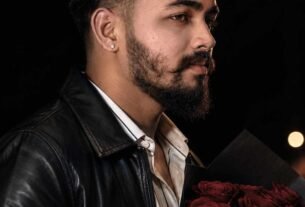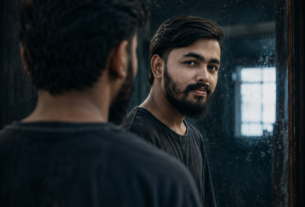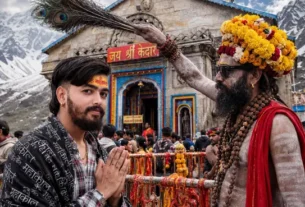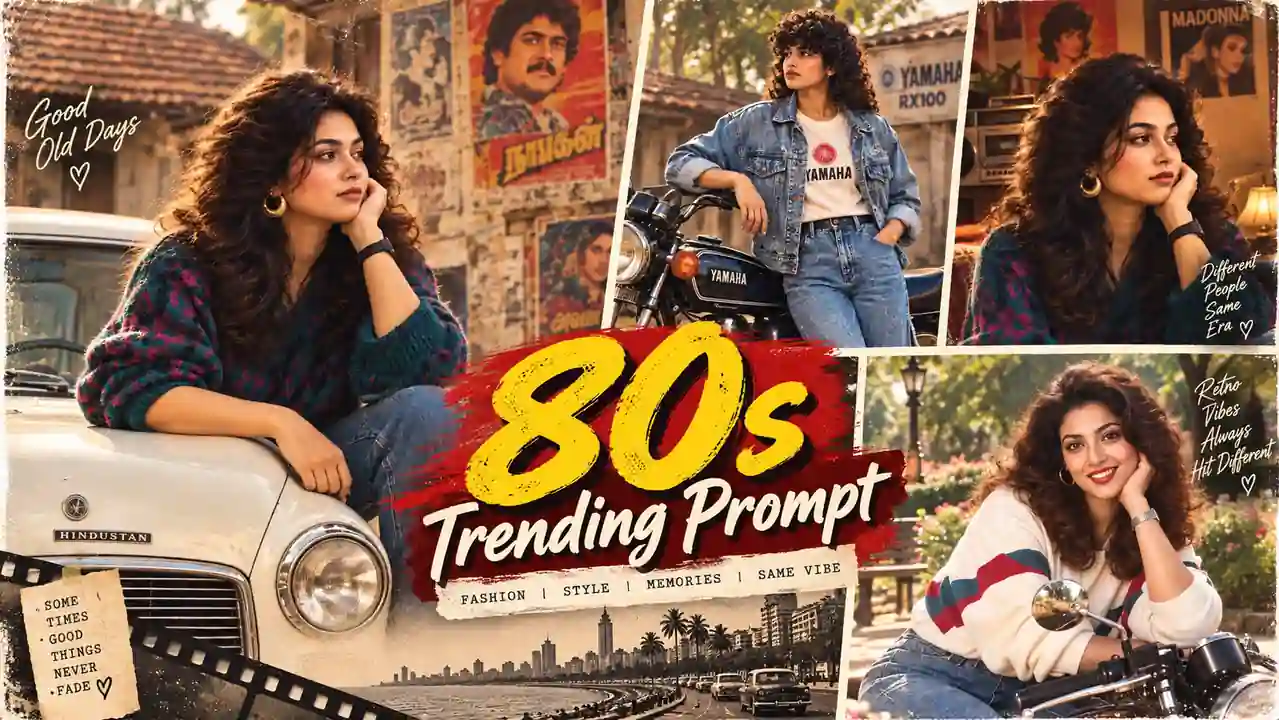
The 80s AI photo editing trend is becoming a creative way to transform ordinary modern photographs into nostalgic portraits inspired by the fashion, photography and lifestyle of the 1980s. With the right AI prompt, you can change the hairstyle, clothing, background, lighting and overall atmosphere while keeping the person recognizable.
Unlike a simple vintage filter, AI can recreate an entire 1980s visual environment around the subject. This makes the final image look much closer to an authentic old photograph rather than a modern picture with faded colors.
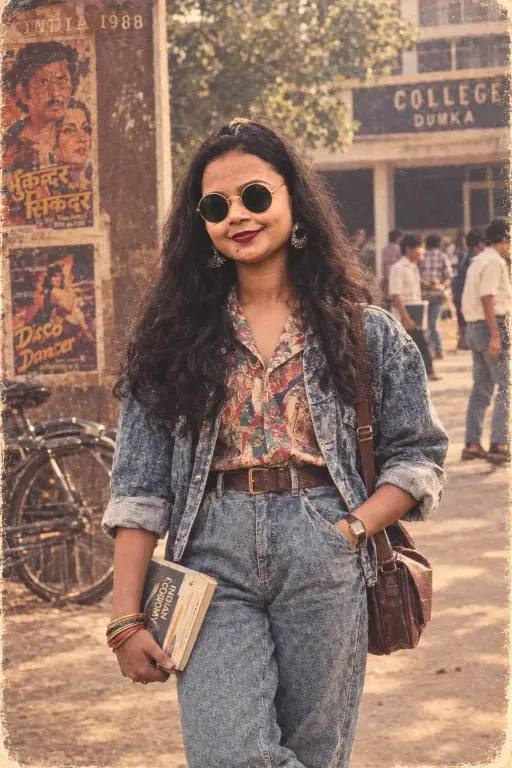
Scroll Down To Get Prompt…👇👇👇
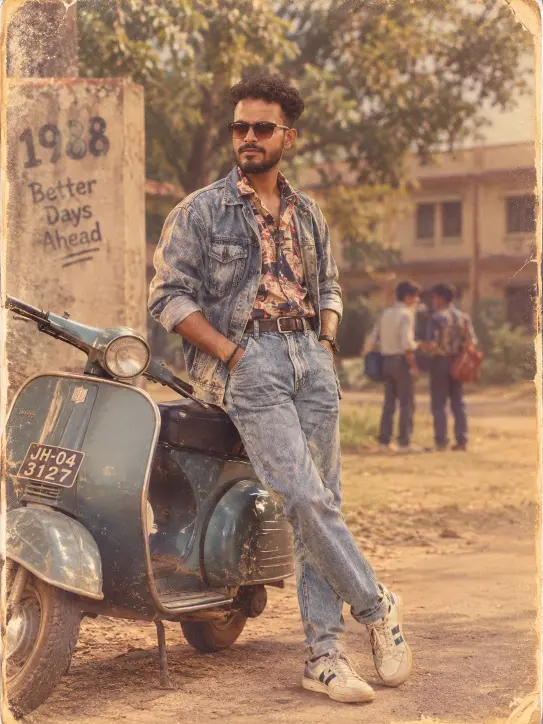
10 Cinematic 1980s Photo Editing Prompts
Choose any prompt and copy it instantly.
🚗 Convertible — Steering Pose
🌊 Marine Drive — Sea Pose
🕶️ Sunglasses Adjustment
🪑 Retro Room — Chair Pose
📻 Vintage Stereo Pose
🚶 Walking Toward Camera
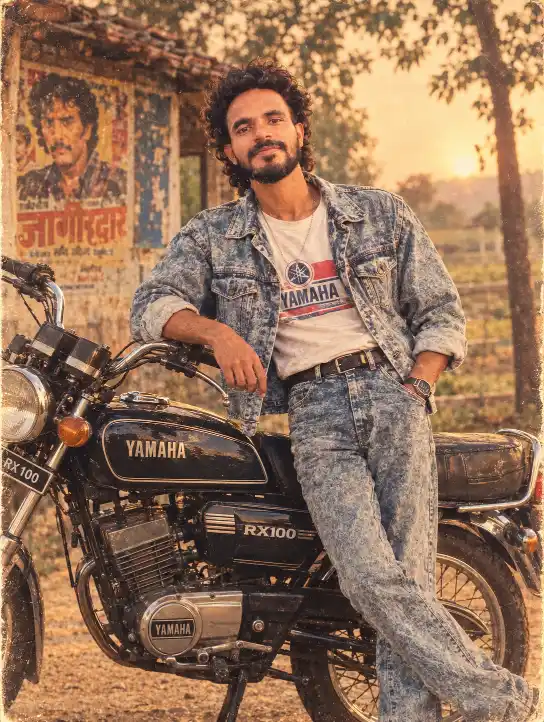
🏍️ Vintage Motorcycle Pose
🌇 Rooftop Sunset Pose
☕ Vintage Café Pose
🎬 Classic Bollywood Movie Poster Pose
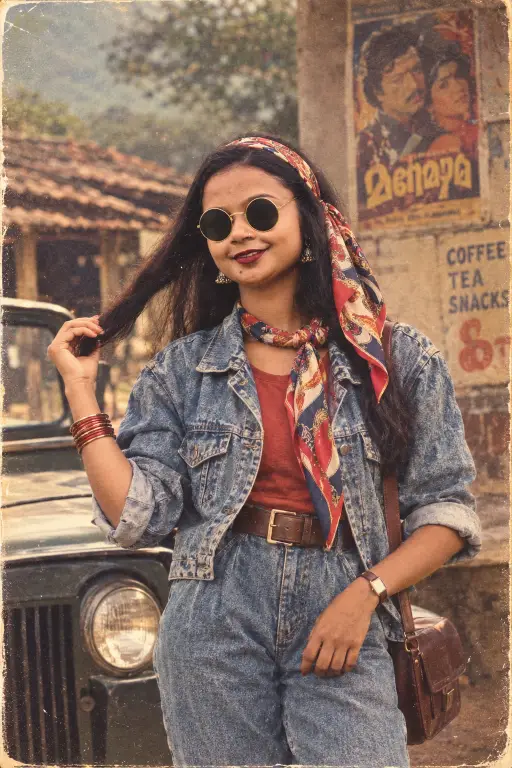
What Is an 80s AI Photo Editing Prompt?
An 80s AI photo editing prompt is a detailed instruction that tells an AI image editor how to transform a modern photograph into a photograph inspired by the 1980s.
A strong prompt can control several elements at once, including:
- 1980s hairstyle
- Retro clothing
- Vintage accessories
- Old-fashioned vehicles
- Period-specific architecture
- Analog camera characteristics
- Film grain
- Warm colors
- Vintage lighting
- Authentic poses
- Retro environments
The goal is to make every part of the image feel like it belongs to the same decade.
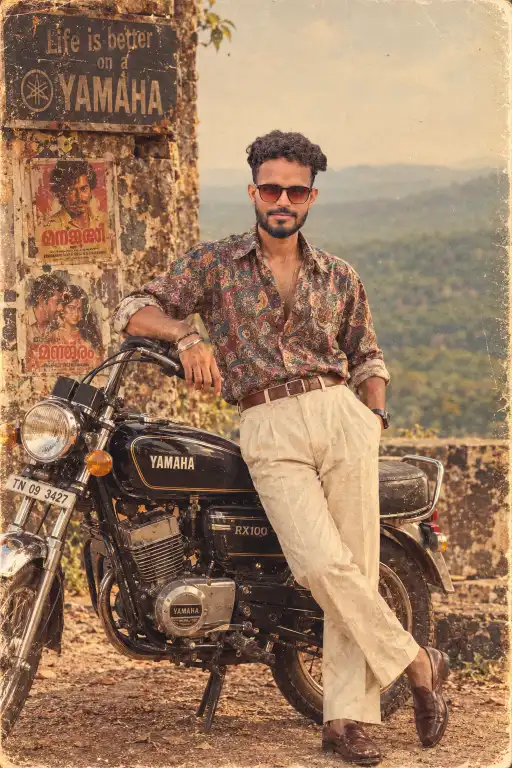
Why Is the 80s Retro Look Popular?
The 1980s had a distinctive visual identity. Fashion was bold, hairstyles were noticeably different, and analog cameras produced photographs with a unique texture.
Today, many people want to recreate that nostalgic appearance without having to arrange a professional vintage photoshoot.
AI makes this possible by allowing users to start with an ordinary photograph and describe the desired historical setting through a prompt.
This is particularly useful for social media posts, profile pictures, creative projects, blog content and nostalgic photo collections.
AI Can Change More Than Just the Color
One of the biggest misconceptions about AI vintage editing is that the effect is simply about making the image darker or adding film grain.
That approach usually produces a weak result.
A convincing 1980s transformation should change the visual context of the photograph.
For example, the AI can replace modern clothing with:
- Wide-collar shirts
- Denim jackets
- Leather jackets
- Pleated trousers
- High-waisted pants
- Retro printed shirts
- Vintage sweaters
- Classic formalwear
Similarly, modern backgrounds can be replaced with old streets, traditional homes, vintage shops, cinema theatres or period-specific urban environments.
Preserving the Person’s Identity
When editing an existing photograph, facial consistency is extremely important.
The AI should preserve the person’s recognizable characteristics while modifying the surrounding visual elements.
A detailed prompt can instruct the model to maintain:
- Facial structure
- Face shape
- Skin tone
- Age
- Natural expression
- Body proportions
- Recognizable facial characteristics
At the same time, the hairstyle, clothing, accessories and background can be redesigned to match the 1980s.
This creates the impression that the same person actually lived in that era.
1980s Hairstyles Can Transform the Entire Portrait
Hair is one of the strongest indicators of an era.
A modern haircut combined with retro clothing can still make the photograph feel contemporary. Therefore, hairstyle should be treated as an important part of the transformation.
Depending on the person’s face and hair texture, AI can create styles inspired by:
- Side-parted retro hair
- Feathered hair
- Brushed-back hair
- Voluminous side-combed hair
- Medium-length layered hair
- Curly retro hair
- Side-swept hair
- Fuller top styling
The hairstyle should be selected according to the individual rather than forcing every person into exactly the same haircut.
Beard and Moustache Styling
Facial hair also needs to match the period.
If the original person has a beard, completely removing it may make the person less recognizable. Instead, the beard can be restyled into a more period-appropriate form.
Possible directions include:
- Fuller natural beard
- Classic moustache and beard
- Rugged retro beard
- Fuller sideburns
- Medium-length vintage beard
If the person does not have a beard, the AI can instead use a moustache, sideburns or a clean-shaven appearance depending on the desired character.
The important thing is to avoid contemporary barber trends such as skin fades, sharp beard line-ups and highly sculpted modern beard designs.
Authentic 1980s Backgrounds
The background is often what determines whether an AI-generated photograph actually feels historical.
A modern building, smartphone or contemporary vehicle can immediately destroy the illusion.
For an Indian 1980s aesthetic, suitable environments include:
- Old residential streets
- Traditional houses
- Vintage cafés
- Cinema theatres
- Railway platforms
- Old markets
- College campuses
- Village roads
- Retro shops
- Classic petrol pumps
- Heritage buildings
- Old bus stands
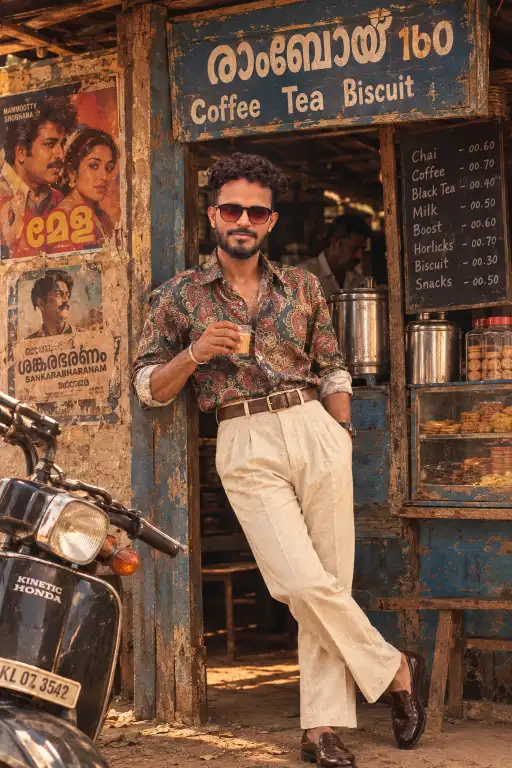
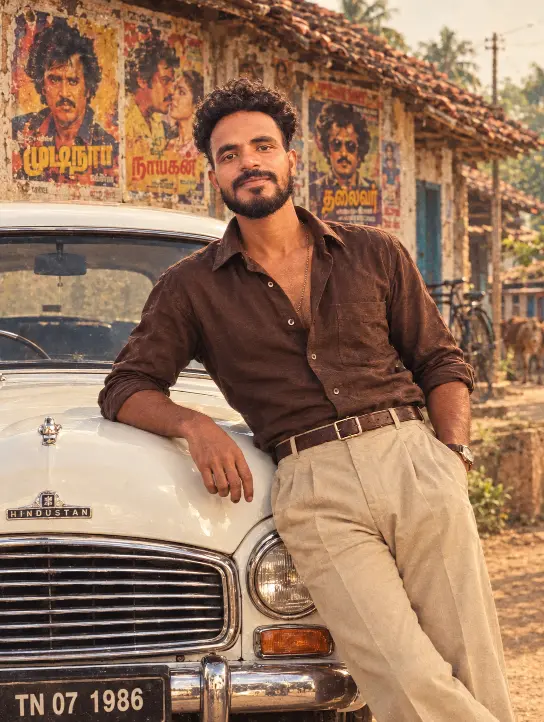
For a Kerala-inspired version, traditional tiled houses, coconut trees, monsoon streets, small-town markets and old Malayalam cinema posters can add a particularly authentic regional character.
The Importance of Vintage Vehicles
Vehicles are another powerful way to establish the decade.
Classic motorcycles, scooters, Ambassador cars, Premier Padmini taxis and old buses can instantly communicate an older time period when used appropriately.
However, the vehicle should complement the composition instead of becoming the entire focus of the photograph.
A well-written prompt can specify whether the vehicle should be:
- Beside the subject
- Behind the subject
- Being driven
- Parked outside a building
- Used as a visual foreground element
35mm Film Photography Effect
Modern digital photographs are generally extremely clean. To recreate an authentic 1980s photography aesthetic, AI can simulate characteristics associated with analog film.
Useful details include:
- Subtle 35mm film grain
- Warm analog tones
- Soft highlights
- Natural contrast
- Slight exposure imperfections
- Gentle lens softness
- Mild color fading
- Authentic film texture
The effect should remain subtle.
If the grain becomes too strong, the image can start looking artificially processed rather than genuinely photographed.
Warm Retro Lighting
Lighting can completely change the mood of a vintage portrait.
Golden-hour sunlight is particularly effective because it creates warm highlights and natural shadows.
Other useful lighting styles include:
- Direct vintage flash
- Soft window light
- Warm afternoon sunlight
- Sunset backlighting
- Street-lamp illumination
- Soft studio lighting
The lighting should remain physically consistent with the environment.
How to Make Different Photos Look Unique
If you’re creating 80s portraits for multiple people, using exactly the same prompt structure can produce repetitive results.
Instead, allow the AI to vary:
- Hairstyle
- Facial-hair styling
- Clothing
- Accessories
- Pose
- Background
- Vehicle
- Lighting
- Camera angle
The overall concept can remain consistent while the individual visual details change.
This is especially useful when creating a collection of retro portraits.
Common Mistakes to Avoid
Using Only a Vintage Filter
A color filter cannot recreate an entire decade.
Using Too Much Film Grain
Heavy grain often looks artificial.
Mixing Modern and Vintage Elements
Modern smartphones, cars and architecture can immediately break the 1980s illusion.
Making Everyone Look Identical
A successful AI prompt should allow variations between different subjects.
Changing the Face Too Much
The purpose of photo editing is generally to reimagine the same person, not replace them with a completely different character.
80s AI Photo Editing Prompt for Indian Photos
Indian photographs can benefit from additional regional details.
Instead of using generic Western 1980s imagery, you can specify an Indian environment with appropriate clothing, architecture, vehicles and cultural details.
For example, the prompt can describe an old Indian street with vintage cinema posters, classic scooters, traditional houses, old shop signs and period-appropriate clothing.
This makes the final result more culturally convincing.
How to Create a Cinematic 80s Photo
For a cinematic result, combine several elements rather than relying on one keyword.
A strong concept might include:
1980s fashion + vintage vehicle + authentic location + golden-hour lighting + 35mm film + natural pose + realistic skin texture.
This combination gives the AI a much clearer visual direction.
Final Thoughts
The 80s AI photo editing trend is not simply about making a photograph look old. The real objective is to recreate an entire visual era around the subject.
The best results come from carefully combining retro hairstyles, period fashion, authentic environments, vintage vehicles, analog film characteristics and realistic lighting, while maintaining the person’s recognizable identity.
If you want a convincing result, avoid telling AI only to “make this photo vintage.” Instead, describe the decade in detail and give the AI enough visual information to recreate it.
A great 80s AI portrait should look like a photograph that was actually taken in the 1980s—not a 2026 photograph wearing an 80s filter.