Prompt Content
REFERENCE IMAGE STRENGTH 100, FACE ID LOCK 100, CHARACTER CONSISTENCY 100, IDENTITY PRESERVATION PRIORITY MAXIMUM. FACE LOCK ON (MANDATORY): Use the uploaded reference image as the exact identity source. Preserve 100% facial identity, face shape, jawline, beard pattern, hairstyle, hairline, eyebrows, eyes, nose, lips, skin tone, ear shape, expression style, and overall appearance. Do not alter age, ethnicity, facial structure, or facial proportions. The same person must appear identically in all three frames with perfect face consistency and realistic likeness. No AI face variation, no face swapping, no different facial features, no beautification, no identity drift. Ultra-accurate face match, maximum facial similarity, photorealistic identity preservation.
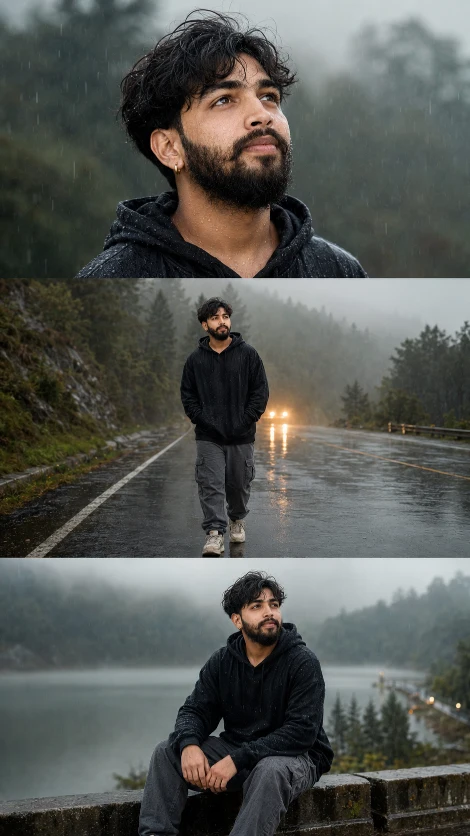
Ultra-premium cinematic rainy road collage, vertical 4:5 ratio, three stacked frames featuring the same young Indian man in all frames. Brown skin, detailed beard texture, realistic wet hair, natural facial details, realistic rain droplets on face and clothes, emotional cinematic mood.
Top Frame: Close-up portrait looking slightly upward into the rainy cloudy sky, soft emotional smile, black oversized hoodie soaked with rain, realistic water droplets on skin and beard, dreamy forest background, cinematic depth of field, ultra-detailed face, premium color grading.
Middle Frame: Full-body shot walking alone on a reflective wet highway after rainfall, black oversized hoodie, grey cargo pants, light sneakers, foggy atmosphere, distant glowing headlights, puddle reflections, misty forest road, realistic rain particles, cinematic storytelling, same exact face.
Bottom Frame: Thoughtfully sitting beside a rainy lakeside road barrier, hands resting on knees, looking into the distance, wet clothes, soft fog, calm water, moody overcast sky, emotional cinematic vibe, shallow depth of field, same exact facial identity.
Hyper-realistic photography, DSLR quality, 85mm lens, natural skin texture, ultra-sharp facial details, cinematic lighting, volumetric fog, realistic rain effects, masterpiece quality, face consistency across all frames, perfect identity lock, no face distortion, no AI artifacts, no extra fingers, no duplicate person, professional movie poster aesthetic.
A Cinematic Rainy-Road Story of Solitude, Emotion, and Reflection
Rain has a unique ability to change the emotional character of an ordinary landscape. A familiar road can suddenly feel mysterious, a forest can become atmospheric, and a simple portrait can take on the emotional weight of a movie scene. This creative concept uses rain, mist, reflective roads, and three carefully composed moments to tell a visual story about solitude and quiet introspection.
The entire composition is designed as a vertical 4:5 cinematic collage, divided into three stacked frames. Although each frame presents a different situation, the same young Indian man remains the central character throughout, creating visual continuity and making the collage feel like three chapters of one emotional journey.
Identity as the Foundation of the Character
The reference image serves as the definitive identity source for the subject. Facial structure, jawline, beard pattern, hairstyle, hairline, eyebrows, eyes, nose, lips, ears, skin tone, and overall proportions are intended to remain consistent throughout all three frames.
This consistency is crucial because the concept is not presenting three unrelated photographs. It is presenting one person experiencing three different moments.
The character should therefore retain the same recognizable appearance from beginning to end, without artificial beautification or changes in age, facial proportions, or defining features.
The emphasis on identity preservation also helps the emotional narrative feel believable. The viewer should immediately understand that the man looking toward the sky, walking along the road, and sitting beside the lake is the same individual.
The Top Frame: Looking Toward the Rain
The first frame introduces the character through an intimate close-up portrait.
He looks slightly upward toward the rainy, cloudy sky, creating an impression that he has temporarily forgotten everything around him. His expression contains a soft emotional smile rather than obvious sadness.
That subtle smile is important. The scene is melancholic, but it is not necessarily hopeless. The expression leaves room for interpretation—perhaps he is remembering something meaningful, accepting a difficult moment, or simply enjoying the calm that comes with rainfall.
His oversized black hoodie is visibly soaked, with realistic droplets accumulating across the fabric.
Water can also be seen naturally across his skin and beard, while his hair appears wet and slightly heavier from the rain. These details make the scene tactile and believable.
Behind him, a dreamy forest environment fades into cinematic depth of field. The background should remain atmospheric rather than distracting, allowing the face to dominate the frame.
Rain as a Storytelling Element
The rain is more than a visual effect.
Droplets on the face, beard, hoodie, and surrounding environment create a sense of immediacy. The viewer should feel as though the photograph was captured during an actual rainfall rather than staged inside a studio.
Individual droplets should interact naturally with surfaces. Some should remain visible on the skin, others should appear on the clothing, and fine rain particles can become visible against darker portions of the background.
This realism helps establish the emotional credibility of the entire collage.
The Middle Frame: Walking Alone
The second frame expands the story dramatically.
Instead of the intimate close-up, the viewer now sees the man from head to toe as he walks alone along a reflective highway after rainfall.
His black oversized hoodie continues the visual identity established in the first frame, while grey cargo pants and light-colored sneakers create a simple contemporary outfit.
The road itself becomes a major compositional element.
Rainwater creates reflective surfaces across the asphalt, allowing distant lights and surrounding environmental tones to appear within puddles. This produces the classic cinematic feeling of a road stretching into an uncertain distance.
The Empty Highway
The man’s position within the large landscape communicates isolation.
He is physically small compared with the road and surrounding forest, creating a visual contrast between the individual and the environment.
Yet the composition should not feel completely hopeless. Distant glowing headlights introduce small points of warmth and human presence in the otherwise cool, foggy landscape.
The headlights can remain soft and slightly diffused through the mist, creating depth without overwhelming the subject.
Fog, Mist, and Reflections
The atmosphere becomes especially important in this frame.
Low fog can partially obscure the distant forest, while thin mist hangs above portions of the road. This creates multiple layers of depth.
The wet highway reflects environmental light, producing subtle mirrored shapes beneath the character.
Rather than making the reflections perfectly symmetrical, realistic irregularities in puddles and wet asphalt should be maintained. Natural imperfections make the scene more photographic.
The Bottom Frame: Quiet Contemplation by the Lake
The final frame slows everything down.
Instead of walking, the man sits beside a rainy lakeside road barrier. His hands rest naturally on his knees as he looks into the distance.
This pose introduces a sense of stillness after the movement of the middle frame.
The calm water, fog, overcast sky, and wet surroundings create a quieter environment. The character appears to have stopped moving—not necessarily because he has reached a destination, but because he needs a moment to think.
His clothing remains wet, maintaining continuity with the previous frames.
A Different Kind of Emotion
The bottom frame is less about visible emotion and more about suggestion.
The thoughtful gaze allows the viewer to wonder what is happening inside his mind.
The composition deliberately avoids an exaggerated crying expression or theatrical sadness. Instead, the emotion comes from posture, environment, lighting, and the direction of his gaze.
This restraint makes the scene feel more mature and cinematic.
One Character, Three Emotional States
The three frames can be interpreted as a gradual emotional progression:
Frame One — Looking Up:
A moment of emotional openness and quiet optimism.
Frame Two — Walking:
A period of movement, uncertainty, and solitude.
Frame Three — Sitting:
A moment of reflection, acceptance, and stillness.
This progression gives the collage a narrative structure.
It feels like the visual equivalent of a short film condensed into three frames.
The Importance of the Black Hoodie
The black oversized hoodie functions as a visual anchor across the composition.
Because the subject appears in all three frames, maintaining the same primary clothing creates continuity. The dark garment also works exceptionally well against rainy environments because water droplets become visible against the fabric.
The oversized silhouette contributes to the relaxed, introspective character of the styling.
Rather than looking like a carefully constructed fashion outfit, it feels practical and believable for a rainy day.
The grey cargo pants and light sneakers provide enough contrast to keep the middle frame visually balanced without introducing unnecessary colors.
Cinematic Color Grading
The color palette is built around cool, muted tones.
Rainy skies, wet roads, fog, and forests naturally lend themselves to blue-grey and desaturated atmospheric colors. This creates a cinematic mood while keeping the man’s skin tone realistic.
The color grading should enhance the environment without turning the subject’s skin into an unnatural color.
Warm highlights from distant headlights can provide a subtle counterpoint to the cooler environment.
This warm-versus-cool relationship gives the composition visual depth and prevents the entire poster from becoming monotonously blue or grey.
Natural Skin and Facial Detail
Because the concept places significant emphasis on facial identity, skin realism becomes essential.
The face should retain natural texture rather than appearing overly smooth. Beard hairs, pores, subtle skin variations, wetness, and natural highlights can contribute to the photographic quality.
The wet environment also provides an opportunity for realistic light interaction across the face.
Rain droplets can catch small highlights, while damp hair and beard can appear darker and slightly more textured.
These details help the subject feel physically present inside the environment.
85mm Lens and Cinematic Depth
The suggested 85mm photographic perspective is particularly effective for the intimate portrait elements.
It can create flattering facial proportions while producing a natural separation between the subject and the background.
In the close-up frame, this allows the face to remain exceptionally prominent while the forest dissolves into soft atmospheric blur.
For the wider storytelling frames, depth of field can be adjusted so that the environment remains recognizable while the character remains visually dominant.
The goal is controlled cinematic depth rather than an excessively blurred background.
Volumetric Fog and Rainfall
Fog and volumetric atmosphere help connect the three frames stylistically.
In the middle frame, mist can soften distant headlights and forest details. In the bottom frame, it can hover over the lake and road, creating a quiet sense of distance.
The top frame can use softer atmospheric haze around the forest background.
The effects should remain physically believable. Excessive fog or artificially bright light rays could make the scene appear like fantasy artwork rather than realistic photography.
The Movie-Poster Quality
The three-frame structure gives the composition the visual language of a contemporary movie poster.
Each section provides a different camera angle, emotional beat, and environmental context.
The close-up establishes the character.
The walking shot establishes the journey.
The seated shot establishes reflection.
Together, they create the impression that the viewer is looking at selected moments from a larger story.
The absence of excessive text or decorative graphics also allows the photography itself to carry the narrative.
The Deeper Meaning of the Rain
Rain frequently works as a cinematic metaphor because it naturally obscures the world.
It can represent uncertainty, emotional release, memory, loneliness, renewal, or simply a pause from ordinary life.
In this concept, the rain does not have to represent sadness alone.
The man’s soft smile in the first frame suggests that solitude can sometimes be peaceful. His walk through the wet highway suggests movement despite uncertainty. His final seated position suggests that sometimes stopping and thinking is just as important as moving forward.
That ambiguity gives the composition emotional depth.
Final Visual Impression
The finished concept is envisioned as a three-part cinematic portrait of one man moving through rain, silence, and introspection.
The first frame captures his face and emotion.
The second places him alone within an expansive landscape.
The third brings the story back to stillness beside the water.
Photorealistic skin, wet clothing, natural rain droplets, realistic reflections, atmospheric fog, cinematic lighting, controlled depth of field, and consistent facial identity all work together to create a cohesive visual narrative.
The strongest quality of this concept is its simplicity. There is no need for dramatic action or exaggerated emotion. A man looking at the sky, walking down a wet road, and sitting quietly beside a lake can communicate an entire emotional story when the environment, expression, lighting, and composition are carefully controlled.
Ultimately, the poster feels like a single rainy evening captured across three emotional moments—a visual story about being alone, continuing forward, and finding a little peace in the silence.