AI video editing is changing the way creators produce eye-catching content. What once required expensive cameras, professional editing software, and hours of manual work can now be achieved with the help of AI tools and well-written prompts. One of the latest creative directions gaining attention is the Aura Farming Korean AI video editing style, which focuses on cinematic visuals, stylish character movements, dramatic lighting, and a polished Korean-inspired aesthetic.
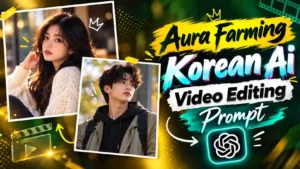
The thumbnail above represents this creative concept with bold typography, cinematic portraits, neon elements, and a modern color combination. But the real value is in understanding how to use the right prompt to create a similar visual experience in an AI video generator.
What Is Aura Farming?
“Aura farming” is a creative internet-style concept centered around making a person look effortlessly cool, confident, stylish, or visually powerful. Instead of simply showing a character performing an action, the goal is to create an atmosphere around them.
Lighting, camera movement, facial expressions, clothing, background, and editing all contribute to the character’s overall “aura.”
When combined with AI video generation, this concept becomes even more interesting. A simple image can potentially be transformed into a cinematic video with subtle movements, realistic camera motion, atmospheric lighting, and dramatic visual effects.
What Makes the Korean AI Style Different?
Korean-inspired visual aesthetics often focus on clean composition, soft cinematic lighting, natural expressions, stylish fashion, and carefully controlled camera movements. The result can feel similar to a scene from a modern music video, fashion film, or Korean drama.
For AI video editing, creators can describe details such as:
- Cinematic camera movement
- Soft natural lighting
- Realistic facial expressions
- Stylish Korean-inspired fashion
- Slow-motion movements
- Shallow depth of field
- Film-like color grading
- Urban or minimalist backgrounds
- Subtle hair and clothing movement
Combining these elements can make an ordinary portrait feel much more dynamic.
How to Create an Aura Farming AI Video
The process is relatively simple. Start with a high-quality portrait where the subject’s face is clearly visible. Upload the image to an AI video generation or image-to-video tool that supports motion prompts.
Next, describe exactly how you want the subject to move. Instead of writing something generic like “make this photo into a video,” provide specific instructions.
For example, you could describe a slow camera push-in, natural blinking, subtle head movement, gentle hair movement, realistic breathing, and cinematic background motion.
The more controlled your instructions are, the easier it is for the AI model to understand the desired result.
Why the Prompt Matters
A good AI video prompt is more than a list of effects. It acts like a mini-director telling the AI what should happen inside the scene.
For example, specifying “slow cinematic camera push-in with natural facial movement” gives the model a much clearer direction than simply saying “make it cinematic.”
You can also mention the mood, lighting, lens style, environment, movement speed, and realism level. However, avoid adding unnecessary effects. Too many instructions can sometimes produce unnatural movements or visual artifacts.
Perfect for Reels and Shorts
Aura Farming-style AI videos can work particularly well for Instagram Reels, YouTube Shorts, TikTok-style videos, and other short-form content platforms.
A strong opening frame combined with smooth movement can make a static image feel much more engaging. Creators can also experiment with transitions, beat-synced editing, slow zooms, and cinematic sound effects after generating the video.
For best results, use a clean, high-resolution source image and avoid heavily distorted faces or complicated backgrounds.
Final Thoughts
The Aura Farming Korean AI Video Editing Prompt concept is a great example of how AI can turn a simple portrait into a cinematic piece of content. The key is not simply using AI, but giving it clear creative direction.
Focus on natural movement, controlled camera motion, realistic lighting, and a consistent visual style. Once you understand how these elements work together, you can create your own variations instead of copying the same viral trend.
AI video generation is becoming increasingly accessible, and creators who learn how to write better prompts will have a major advantage when experimenting with new visual styles.