Prompt Content
REFERENCE IMAGE STRENGTH 100 | FACE ID LOCK 100 | CHARACTER CONSISTENCY 100 | IDENTITY PRESERVATION MAXIMUM
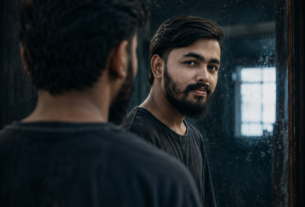
Use the uploaded reference image as the exact identity reference. Preserve 100% facial identity, face shape, jawline, hairstyle, hairline, eyebrows, eyes, nose, lips, ears, skin tone, beard style, mustache, and overall appearance. Do not alter age, ethnicity, facial structure, or natural facial proportions.
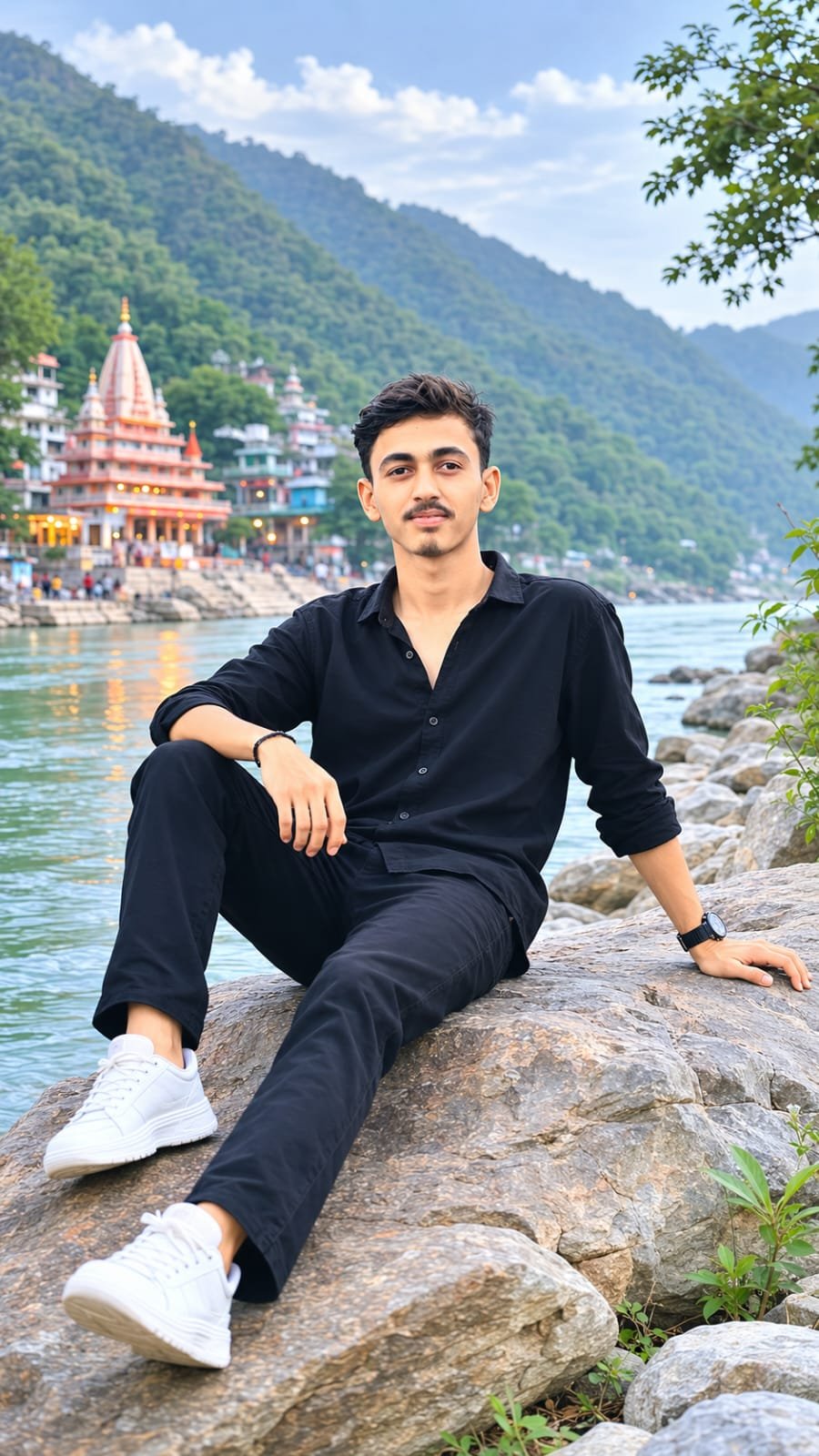
Ultra-realistic cinematic travel portrait of the same young Indian man sitting naturally on a large textured rock beside a calm emerald-green mountain river. Wearing a premium all-black casual outfit: black shirt, black cargo pants, and clean white sneakers. Side-profile candid pose, looking peacefully toward a beautiful ancient riverside temple surrounded by lush green mountains.
Stunning Himalayan travel atmosphere, crystal-clear river water with realistic reflections, detailed rocky foreground, soft morning daylight, gentle mountain haze, vibrant greenery, scenic riverside landscape, peaceful spiritual travel mood, natural environmental lighting, shallow depth of field, DSLR photography quality, ultra-sharp facial details, realistic skin texture, natural expression, muted cinematic color grading, Instagram travel influencer aesthetic, premium tourism photography, photorealistic composition, volumetric light, high dynamic range, breathtaking mountain scenery, highly detailed background, professional 85mm lens, f/1.8, masterpiece quality, 8K ultra HD, realistic shadows, travel magazine cover style.
Negative Prompt:
low quality, blurry face, distorted face, different person, cartoon, anime, painting, CGI, extra fingers, extra limbs, duplicate person, overexposed, oversaturated, bad anatomy, unrealistic skin, facial deformation, cropped head, watermark, logo, text, noise, motion blur, low resolution, artificial lighting, plastic skin, exaggerated features, ugly hands, tilted eyes, mutated body, poor composition, duplicate objects.
Himalayan Riverside Serenity: A Cinematic Portrait of Peace, Nature, and Spiritual Travel
This concept moves away from the crowded pilgrimage atmosphere and creates something much quieter: a young man sitting beside a pristine mountain river, observing an ancient riverside temple while surrounded by the immense beauty of the Himalayas.
The visual story is built around silence, reflection, nature, and spirituality. There is no dramatic action. The power of the image comes from the stillness of the subject and the scale of the landscape around him.
The Man as the Personal Focus
The uploaded reference image remains the identity foundation for the young man.
His facial structure, jawline, hairstyle, hairline, eyebrows, eyes, nose, lips, ears, beard, moustache, skin tone, and natural facial proportions should remain consistent with the reference.
The objective is to preserve recognizable identity rather than turn the subject into a generic travel model.
His expression is peaceful and contemplative.
Because he is shown in side profile, the silhouette of the nose, lips, jawline, beard, and forehead becomes particularly important. The profile should remain natural and consistent with the reference identity.
Sitting Beside the Mountain River
The man sits naturally on a large textured rock positioned beside a calm emerald-green river.
The rock should appear substantial and weathered, with visible cracks, uneven surfaces, small stones, and natural mineral textures.
His posture is relaxed.
He is not posing dramatically for the camera.
Instead, his body language suggests that he has paused during a journey simply to appreciate the landscape.
This relaxed posture gives the photograph a documentary quality.
The All-Black Outfit
The subject wears a premium all-black casual outfit consisting of:
- Black shirt
- Black cargo pants
- Clean white sneakers
The monochromatic clothing allows the natural environment to dominate the color palette.
The black outfit creates a strong silhouette against the green mountains and bright river.
The white sneakers introduce a small visual contrast and help define the lower portion of the composition.
Clothing folds should remain realistic, especially around the elbows, knees, waist, and seated areas where the fabric naturally compresses.
The Side-Profile Perspective
The subject looks toward the ancient temple rather than toward the camera.
This is a deliberate storytelling choice.
A direct camera gaze would turn the image into a conventional portrait.
The side profile transforms it into a moment of observation.
The viewer is essentially looking at someone looking at something meaningful.
That creates a more contemplative visual experience.
His gaze becomes the invisible line connecting the man, river, temple, and mountains.
The Emerald-Green River
The river is one of the most important environmental elements.
Its emerald-green water should appear clean, calm, and naturally translucent.
Subtle variations in the water’s surface create realistic reflections of the surrounding mountains and vegetation.
The water should not look artificially turquoise.
Natural green tones, slight transparency, small ripples, and irregular reflections help establish realism.
The river also provides a horizontal visual structure through the composition, separating the foreground rock from the distant temple and mountains.
The Ancient Riverside Temple
Across or beside the river stands a beautiful ancient temple.
Its architecture should feel historically rooted in the Himalayan environment.
Stone surfaces, weathering, small architectural details, and natural aging help distinguish it from a newly constructed building.
The temple is not meant to dominate the image.
Instead, it functions as the destination of the man’s gaze.
That makes the temple emotionally important even if it occupies a relatively small portion of the frame.
The Relationship Between Man and Temple
The strongest storytelling element is the distance between the subject and the temple.
The man is physically sitting in the foreground.
The temple is positioned farther away.
Between them flows the river.
This creates a visual progression:
Man → River → Temple → Mountains
The river becomes almost symbolic—a natural boundary between the individual and the sacred architecture.
The subject is not actively worshipping.
He is simply observing.
That subtlety gives the scene a more mature emotional quality.
Lush Himalayan Mountains
The surrounding mountains are covered in vibrant greenery.
Rather than showing barren or heavily snow-covered peaks, the concept emphasizes the lush side of Himalayan landscapes.
Dense vegetation, layered mountain slopes, scattered trees, and atmospheric depth create an expansive natural environment.
The mountains should gradually become softer with distance.
This atmospheric perspective prevents the background from looking artificially sharp.
Morning Light
Soft morning daylight illuminates the scene.
The light should be gentle rather than harsh.
It can softly illuminate the subject’s face, the rock, the river, and patches of vegetation.
The morning atmosphere creates a sense of freshness and tranquility.
It also works beautifully with the emerald-green water because soft sunlight can produce subtle highlights without making the river appear artificially bright.
Mountain Haze
A thin layer of mountain haze creates depth between the foreground and distant slopes.
The haze should be subtle.
Too much fog would conceal the landscape.
Too little would make the distant mountains appear unnaturally close.
The ideal result is a gradual transition from sharp foreground details to softer distant terrain.
This is characteristic of real outdoor landscape photography.
Textured Rocky Foreground
The foreground contains detailed rocks and natural terrain.
Their surfaces should include realistic roughness, cracks, small particles, and variations in color.
These details give the photograph physical depth.
The viewer should almost be able to feel the rough surface beneath the subject.
The contrast between rugged rock and smooth river water also creates a pleasing visual balance.
Natural Environmental Lighting
The lighting should come primarily from the environment.
There should be no obvious studio light.
The subject’s face, clothing, rock, river, and temple all need to respond to the same natural illumination.
Shadows should remain soft and consistent with the morning sun.
This helps maintain the feeling that the photograph was genuinely captured outdoors.
85mm Lens and Portrait Depth
The 85mm lens aesthetic is particularly appropriate for this type of travel portrait.
It provides flattering natural compression while allowing the subject to remain visually separated from the background.
The man’s side profile can remain highly detailed.
The nearby rock and vegetation can retain texture.
The distant temple and mountains gradually soften.
This creates a premium tourism-photography appearance without destroying the sense of place.
Realistic Skin Texture
The subject’s skin should remain natural.
Fine pores, beard texture, subtle facial imperfections, and realistic tonal variation should be preserved.
The image should avoid excessive beauty retouching.
A travel photograph becomes more convincing when the person looks like a real individual experiencing the environment rather than a digitally perfected model.
The Color Palette
The composition naturally develops a restrained palette:
Black — clothing and strong foreground silhouette
White — sneakers and highlights
Emerald green — river and vegetation
Earth tones — rocks and temple
Soft blue-green — distant mountains and atmospheric haze
This allows the landscape to feel vibrant without becoming oversaturated.
The muted cinematic grading keeps the colors sophisticated.
Spiritual Travel Mood
The spiritual element is intentionally subtle.
There are no oversized religious symbols or dramatic divine effects.
Instead, spirituality comes from the environment itself.
An ancient temple sits beside a mountain river.
The surrounding landscape is quiet.
The man sits peacefully and looks toward the temple.
The scene suggests contemplation without explicitly explaining what he is thinking.
That ambiguity is valuable because it allows the viewer to interpret the moment personally.
Tourism Photography Aesthetic
The composition resembles premium travel-magazine photography.
It combines:
- Strong human subject
- Recognizable destination
- Beautiful natural environment
- Authentic clothing
- Controlled depth of field
- Natural lighting
- Detailed textures
- Scenic composition
The image could function equally well as a personal travel memory or a professional tourism campaign photograph.
Why the Image Works
The concept succeeds because it does not try to make every element compete for attention.
The man is the emotional focus.
The temple is the narrative destination.
The river creates separation and movement.
The mountains provide scale.
The greenery establishes the Himalayan environment.
The rock anchors the foreground.
Each component performs a specific visual function.
Final Visual Impression
The finished photograph would portray a young Indian man sitting quietly beside an emerald-green Himalayan river, dressed entirely in black except for his white sneakers.
He sits on a weathered rock in side profile, peacefully looking toward an ancient temple surrounded by lush mountain slopes.
Morning light softly touches the landscape.
The river reflects the surrounding greenery.
Mountain haze creates depth.
The ancient temple remains visible in the distance.
Nothing feels hurried.
Nothing feels staged.
The photograph ultimately communicates quietness rather than spectacle.
It is the visual story of someone taking a pause from the journey—not to perform for the camera, but simply to sit, observe, breathe, and absorb the spiritual beauty of the Himalayas.